
The above photo shows people in an evacuation zone at the Eaton, CA, fire taking selfies and videos near burning homes last week. And they’re obviously having fun doing it and simultaneously posting to a social media site.
I have a friend who lives about a half-hour away in Claremont. No fires there yet, but the devastation around her is, she says, “apocalyptic.” Sure, it should be documented and shared so we all understand what can happen when climate change limits rainfall to 0.05 inches in a year and ramps up hot, deadly winds. But not by gawkers anxious to put themselves in the center of it for fun and social media likes. Those people were in the way of emergency personnel and legitimate media, and their behavior is sick.
What exactly is the world is coming to?
And I don’t mean the end times or Armageddon or the rapture or any of those other apocalyptic thingies evangelicals rail about. What’s happening in this photo is just plain stupidity, and there’s plenty to go around.
Two cases in point
A few years back I saw a woman injured at my community fitness center. I was pedaling a recumbent bike situated behind a row of other exercise machines. In front of them was a walkway. A woman about my age, traversing the walkway, tripped over the base of one of the machines in the row in front of me and went down. I heard the crack as her head hit the floor and I saw the blood spew. She cried out in pain.
Within seconds, she was surrounded by most everyone else in the center, videotaping or taking photos–a veritable piranha feeding frenzy. I overheard one woman on her phone recording, narrating and posting what was going on, live, but no one dialed 911. Gym staff in the nearby enclosed office obviously couldn’t hear the injured woman’s cries with the insulating wall of people gathered round, and I was the only one who chose to scream louder than the victim and alert staff help was needed pronto.
My big mouth served me well that day.
Staff launched into action, calling 911 and administering first aid to help control the bleeding until paramedics arrived a few minutes later. Gawkers had to be pushed aside so help could reach this woman. They only moved reluctantly. I saw it all from a ringside seat–the exercise bike–and, believe me, I wish I hadn’t. The crack of her skull resounded in my head for months. I shudder to think how this woman’s privacy was invaded, with all those images of her bleeding onto the floor of the fitness center posted on social media.
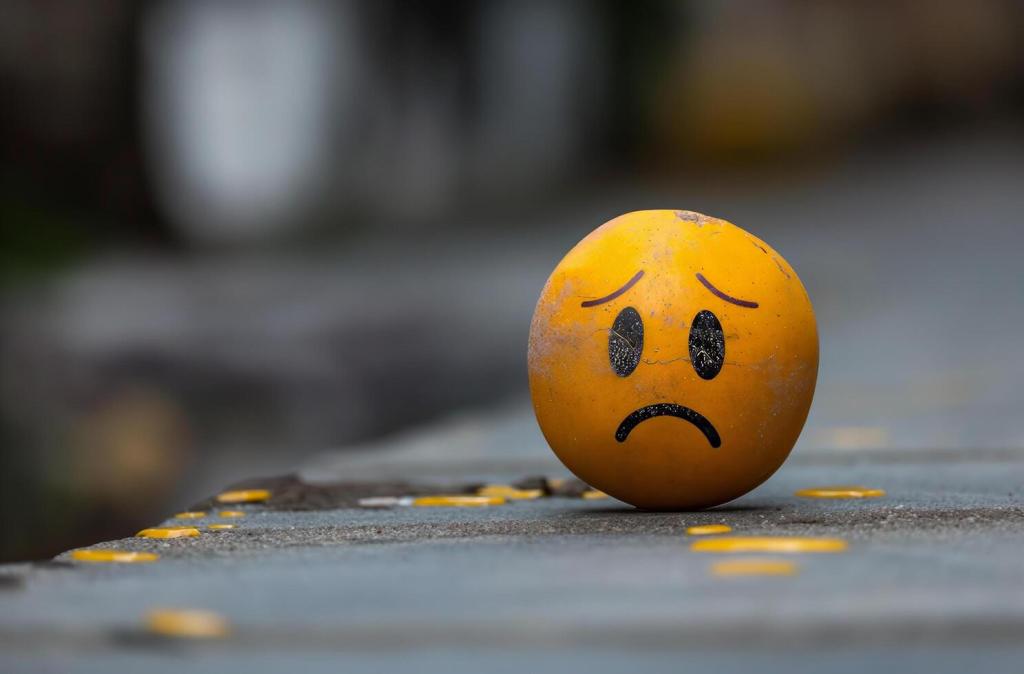
What are people thinking?
Another time, I was involved in a car accident and the other car hit a traffic light standard. I moved my car out of the roadway and went to see if the other driver was okay. I couldn’t get close to him (he was stunned but uninjured) because of gawkers with their phones and do-gooders, clogging what was a busy street at rush hour. This time I did hear 911 calls going in, though.
More than a few dirty looks were cast my way because I was seen as the cause of the accident (though it was more complicated than that). But lack of proximity helped in this case because my view took in the underside of the vehicle, leaking fluid. I shouted over all those smothering the driver with their attentions and clicks, “You need to get him out of this vehicle and move away from it because it’s leaking fluid.”
Again, my loud mouth came in handy. Everyone moved, tickety boom. One person helped the driver out as paramedics arrived and took over. It was probaby the radiator that busted, but it could have been the gas tank. Thankfully, nothing exploded–except, probably, social media posts from witnesses.
Yes, we’re getting more & more stupid
Jonathan Haidt, social psychologist at NYU’s Stern School of Business wrote about our society’s trajectory into stupidity nearly three years ago and laid the blame at the feet of social media and Internet consciousness. He used biblical imagery to describe it as well: the tower of Babel. You can find the full story in Genesis 11, if you have a hankering, but here’s the short version:
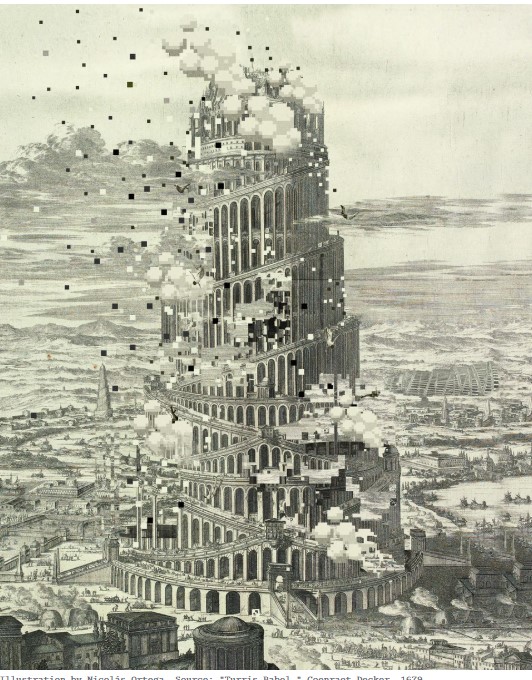
Seems the descendants of Noah (remember the flood and the ark?) built a great city and a tower with its top scraping the heavens. They were quite proud of their accomplishment and thought they would soon be on a par with God. But their hubris offended God, and he said (through Moses or whoever compiled Genesis):
Behold, they are one people, and they all have the same language…and now nothing they purpose to do will be impossible for them. Come, let us go down, and there confuse their language, that they may not understand one another’s speech. [NAS translation]
The Bible doesn’t explain who God is chatting up or who the “us” is that he enlisted to break things up–archangels maybe? On the surface, the account reads like an early explanation of how different languages came to be. Genesis doesn’t say God destroyed the tower, but that’s the idea most of us carry in our heads.
Haidt’s imagined aftermath pictures “people wandering amid the ruins, unable to communicate, condemned to mutual incomprehension,” all of which sounds a lot like the landscape of today. He continues:
The story of Babel is the best metaphor I have found for…the fractured country we now inhabit…We are disoriented, unable to speak the same language or recognize the same truth. We are cut off from one another and from the past…Babel is…a story about the fragmentation of everything. It’s about the shattering of all that had seemed solid, the scattering of people who had been a community…Babel is a metaphor for what some forms of social media have done to nearly all of the groups and institutions most important to the country’s future—and to us as a people.
And it’s happening worldwide to people of all cultures. Babel = babble = social media..
Officially recognizing the ‘rot’
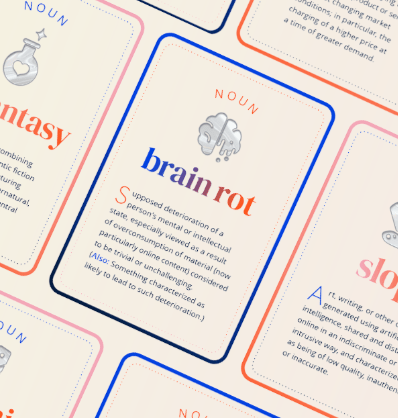
Small wonder Oxford University Press named “brain rot” the 2024 word of the year. Though, just to point out, “brain rot” is TWO words, not one.
Henry David Thoreau’s Walden is cited as the first recorded use of the expression: “While England endeavours to cure the potato rot, will not any endeavour to cure the brain-rot – which prevails so much more widely and fatally?“
Hmmm…Maybe Oxford is basing its one-word idea on Thoreau’s hyphenation, even though they subsequently excised the hyphen, thus dividing it into two words but still treating it as one. Regardless, it appears that what was merely symptomatic in Thoreau’s time has become systemic in ours because of social media.
Here’s how an article in Psychology Today summed it up:
Social media has turned life and its experiences into an exercise in narcissism. No matter what the experience is actually about, it becomes about you, the person who is living it. A concert is not about the music, a restaurant not about the food, a sporting event not about the sport, a funeral not about the loss; it’s all about you, the doer, and what the event says about you. Life experiences are not lived directly so much as they are used as opportunities for announcing what kind of person you are. Life now is a product through which to promote your image, but (and here’s where it gets really strange) with little connection to whether that screen image accurately reflects the inside you.
Brain rot.

Death by selfie
Sometimes the manufactured life and the actual life merge, and it isn’t pretty. A few years ago, a man simultaneously posing with a walrus at a Chinese wildlife center and posting about it was pulled into the water and drowned by his pal Wally.
The walrus’ longtime keeper dove in after to try to rescue the man but was also drowned in what was described as playful behavior on the part of the 1.5-ton walrus. A friend of the man told reporters afterward that he was delighting in these social media posts around the same time he heard news reports of the man’s tragic end. The wildlife’s center security footage of the drownings subsequently went viral.
Enter Meta CEO Mark Zuckerberg’s recent announcement that its platforms were ditching fact-checking because he saw it as an “impediment to free speech.” At first this made me angry, but in retrospect, maybe it’s a good thing.
Real fact-checking is something legitimate media outlets and reporters do as they research, source and write a story. Multiple editors then review their work, ask questions and make revisions. A magazine I did freelance work for had fact-checkers who contacted each source and read their quotes back to them. Even working in employee communications for a corporation, I doublechecked all my articles with my sources, and two more people reviewed for typos as well as clarity, accuracy and fairness. I reviewed it again after typesetting but before printing.
So social media’s begrudging, hit-and-miss attempts to clear away outright lies, hate language and misleading health information never came close to true fact-checking. Why pretend it did or could, considering the volume of posts it had to review? Rather than an “impediment to free speech,” fact-checking done right promotes responsible speech. No speech is “free” in the sense of without cost or parameters. Social media only dirties the reputation of free speech and fact-checking by pretending it has anything to do with either.
Suffice it to say that we shouldn’t kid ourselves that we can rely on ANYTHING we read or see on social media. Better to expose the whole mess for what it is and limit our participation.
Brain rot is brain rot.
You might also enjoy…
FROM THIS BLOG:
- Barb’s Cataract Adventures: A Cautionary TikTok Tale
- Dangers of Spreading Weather Conspiracy Theories
- Quiz Yourself: How Factfulness Challenges Your Views of the World
SOURCES:
- “Why the Past 10 Years of American Life Have Been Uniquely Stupid,” by Jonathan Haidt in The Atlantic.
- “When Posting Our Life is More Important Than Living It,” by Nancy Collier in Psychology Today.
- “Death By Selfie: 11 Disturbing Stories of Social Media Pics Gone Wrong,” by Bryn Lovitt in Rolling Stone.
- “Fact-Checking Was Too Good for Facebook,” by Ian Bogst in The Atlantic.




 & {sometimes} WHY
Leave a reply to Rejecting Pardon: Pam Hemphill’s Stand Against Rewrite of History – & {sometimes} WHY Cancel reply