
On Nov. 6 of this year the thought uppermost in my mind was what I could do to put our country back together again after a close and contentious presidential election. More than half the country voted differently than I did and, like it or not, I wanted to understand the people and the ideas behind those votes. I wasn’t interested in espousing those ideas, mind you, but I thought trying to know some of the people who held them was a start. I was still smarting from an encounter with a pool friend last summer that I wrote about in Twisted Pool Talk #3, Navigating Political Conversations with a Talkaholic: Barbie Tales.
That’s when I came across a podcast series on The Atlantic called “We Live Here Now.” It traces what happened when Micki Witthoeft, mother of Ashli Babbitt, the Jan. 6 protester who was killed storming the Capitol, moved in down the street from two reporters. It certainly wasn’t love at first sight. Lauren Ober and Hanna Rosin recount initial contact:

OBER: I guess it started just like any other dog walk. Hanna and I leashed up our pups and set out from our house on our post-dinner stroll. It was early November of 2023, and I remember it was unseasonably warm. We headed off down the hill from our house, towards our neighborhood park.
ROSIN: A block past the park, Lauren spotted it: A black Chevy Equinox with Texas plates we’d seen parked around the neighborhood. Just a basic American SUV except for the stickers that covered the back windshield—
OBER: —stickers we’re very much not used to seeing in our mixed-race, mixed-income neighborhood. Our vibe is more like, Make D.C. the 51st state, and, No taxation without representation. But these stickers were a combo platter of skulls and American flags. There was a Roman numeral for three—the symbol of a militia group called the Three Percenters—and the pièce de résistance: a giant decal in the center of the back window that read, free our patriots. j4j6, meaning, Justice for January 6.
ROSIN: Lauren notices every new or different thing in the neighborhood, and this car was definitely different. As we walked past it, Lauren said what she always said when we saw this car.
OBER: “There’s that fucking militiamobile again!” Right after I said that moderately unneighborly thing, the passenger-side window rolled down, cigarette smoke curled out of the car, and the person inside shouted, “Justice for J6!”
“You’re in the wrong neighborhood for that, honey.” And then the woman in the car said words I’m not going to forget anytime soon: “We live here now. So suck it, bitch.”
The woman in the SUV was not Witthoeft but a friend whose husband was a convicted insurrectionist.
Next steps
More than a year before the election, Ober and Rosin, I think, had the same feeling I did post-election. What if they acted neighborly rather than with hostility? What would they learn in return? How would it change them? How would it change these people whose views collided with their own? That’s how the podcast series was born.
“We Live Here Now” audio and transcripts are available on The Atlantic to subscribers, but anyone can sign up for a free 30-day trial. Audio episodes only are available on Apple Podcasts, and it’s free to listen if you register. Each episode is under 30 minutes. Check out the trailer first, then proceed through to the six episodes:
- We’re Allowed to Be Here
- You’ve Got to Get Your Militias Straight
- Thank You for Calling, President Trump
- I Bet It’s a January 6 Case
- If It’s My Time to Die, It’s My Time to Die
- People Don’t Have to Throw Stones
You also might enjoy listening to/reading an interview with Rosin about this experiment in neighborliness, “When Neighbors Live in Different Worlds.“
What I learned by listening & what I wish I knew
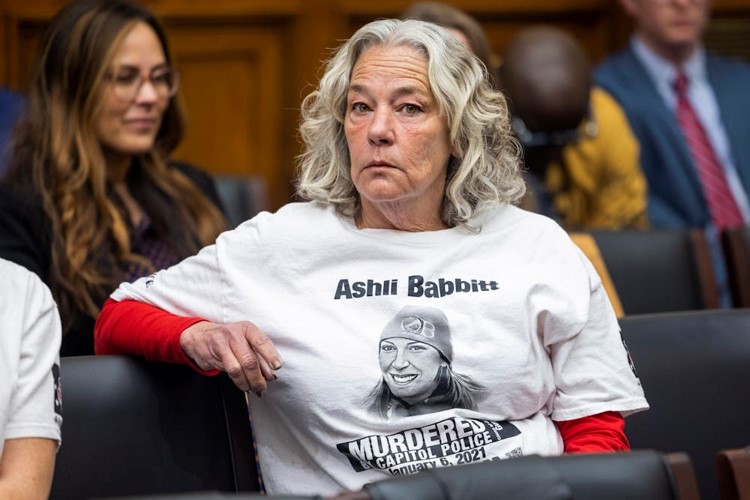
Ashli’s mother, Micki, wasn’t interested in politics until police killed her daughter, and that grief radicalized her.
She wanted justice for Ashli, but she was also seeking to make meaning out of a terrible loss. I thought it was interesting that at the time of Ashli’s death, the two had quarreled and not spoken in a few months, which likely made the loss even more keenly felt.
While Witthoeft agrees that the more violent protestors and those wielding weapons “deserved what they got,” she was compelled to take action in support of less violent Jan. 6 defendants because of a dream in which Ashli appeared to her. She told her mother she was a political prisoner arrested for shooting a red, white and blue rocket around the moon. Other prisoners were with her in the dream, and Ashli said they were all “goners.”
I secretly wonder what Carl Jung would make of that. Sigmund Freud, too, but I’m not going to speculate here, except to say the dream was more about Micki’s future than Ashli’s past.
Witthoeft’s friendship with Nicole Reffit, wife of the first convicted insurrectionist Guy Reffit, started after his sentencing. Reffit was, however, armed during the insurrection, which the podcast doesn’t mention. Did Witthoeft simply overlook that when befriending Nicole and supporting Guy?

Ashli Babbitt wasn’t always a libertarian who wrapped herself in the flag and stormed the Capitol.
She joined the Air Force in 2004 and voted for Barack Obama in 2008. By 2014 she’d been deployed at least eight times in Afghanistan, Iraq, Kuwait and Qatar. So what happened to her during that time that changed her? The podcast doesn’t answer this, but the question hangs in the airwaves and in my brain.
Another issue the podcast doesn’t address is the history of confrontation and violence Ashli had long before storming the Capitol. A woman who’d been in a long-term relationship with Aaron Babbitt before Ashli married him had to take out a protective order against her after Ashli stalked her then rammed her vehicle three times on the highway.
Some of the people serving sentences for Jan. 6 got caught up in the emotion of the crowd and may be serving unreasonably long sentences.
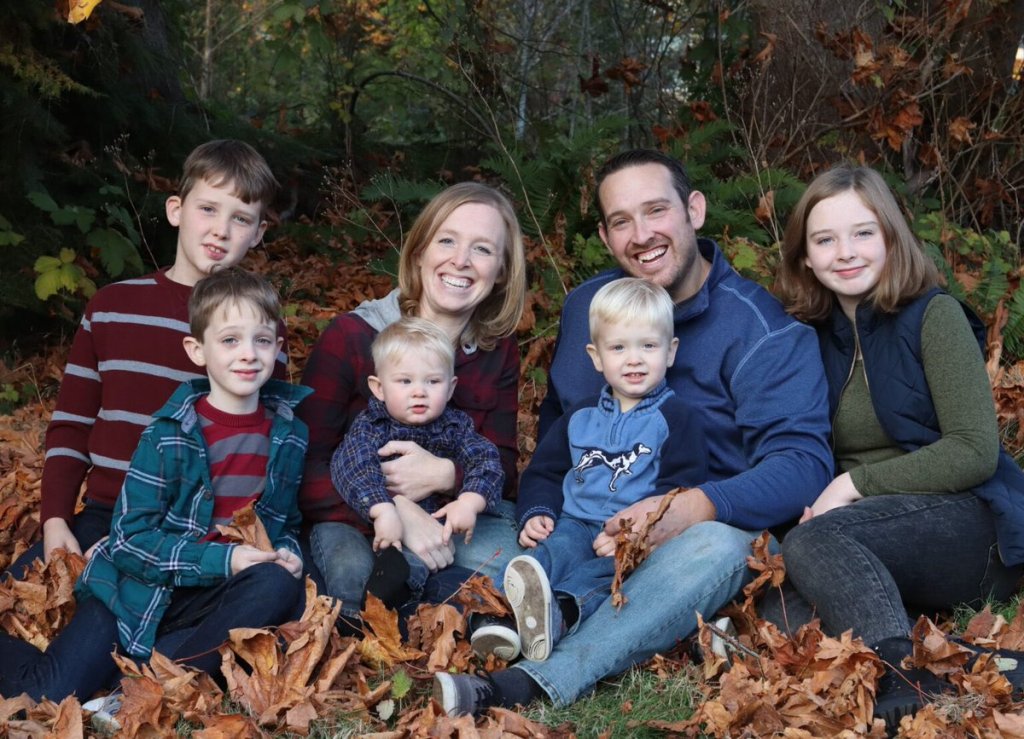
Ober herself served on the jury that convicted Taylor Johnatakis, and Rosin’s interview with his wife Marie is poignant.
Ober concluded Johnatakis was guilty of what he was accused of, but she was uncomfortable with the whole experience of due process in the Johnatakis case, as the judge overseeing the trial also seemed to be.
Johnatakis was his own counsel and behaved oddly. This is detailed in episode 4 and worth a listen, even if you’re not up for all six episodes. Marie Johnatakis has become sole support of their five children and had to sell their family home to survive. Of the interview with her, Rosin concludes…
And this was the beautiful, terrible exchange that brought me to human empathy and then deposited me at a dead end—because the couple had doubled down on their doubts about the [2020] election watching Dinesh D’Souza’s movie 2000 Mules, a garbage film full of conspiracies and lies. And that had prompted them to think everything involving the government was rigged, including his trial, which is why he went about it in the weird, self-defeating way he did.
Conditions in the DC jail that housed accused insurrectionists were abysmal, which further served to unite offenders.
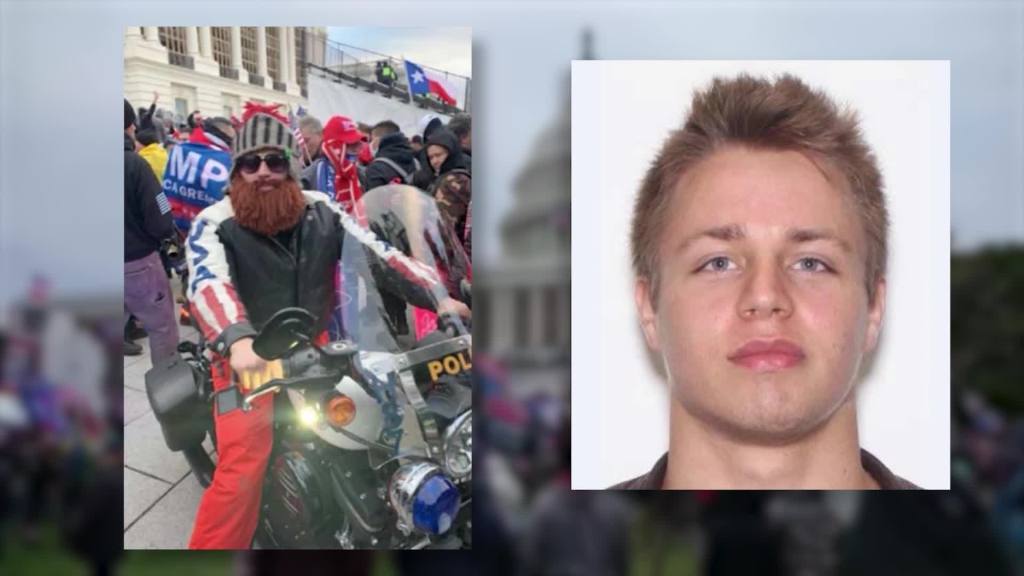
Bad food and unsanitary conditions were filmed by inmate Brandon Fellows and leaked to The Gateway Pundit. Whether these conditions were borne only by Jan. 6 offenders or by all jail inmates, the podcast doesn’t say. Fellows says his efforts at calling attention to the problems earned him the respect of his fellow inmates.
Jan. 6 offenders were separated from other jail inmates to avoid confrontations between the white supremacists among their ranks and the largely black population housed in the facility. While this seems on its face a protective measure, in the end it bonded the men even more and radicalized some of those charged who were not diehard insurrectionists going in.
Fellows himself said he came out of his jail stay seeing his fellow inmates as “righteous, exalted, founding fathers.” Fellows stayed for a while at Witthoeft’s, but Micki distanced herself from him after he and a date were involved in a bar brawl over his MAGA hat. Witthoeft said she didn’t want that kind of attention brought to her place of residence.
The aftermath
Rosin revealed that Ober was broken up by the whole podcast project because she learned to like Witthoeft and housemate Reffit.
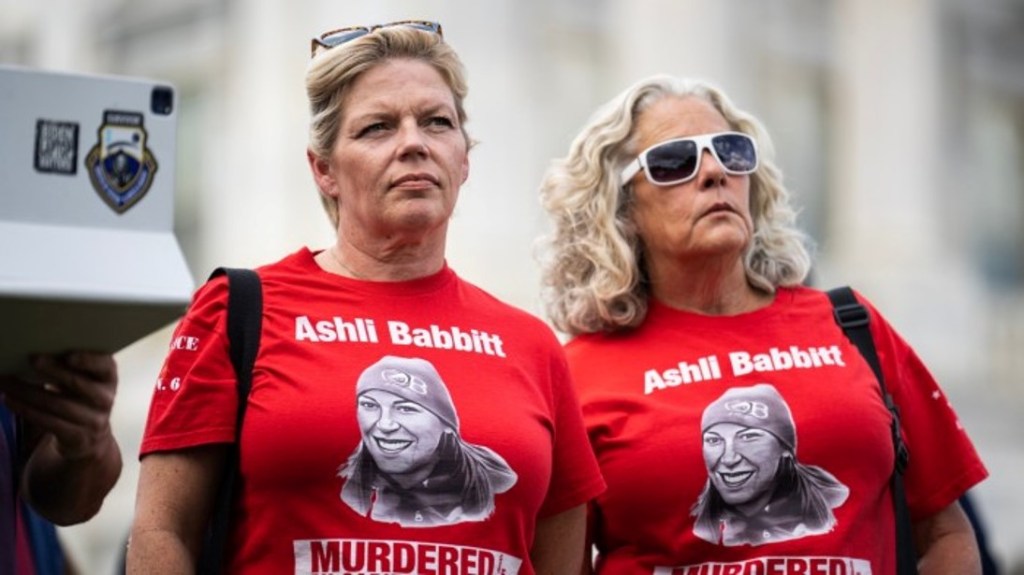
“Lauren can’t talk about the project without crying. She knows her neighbors believe the opposite of what she does but can’t help feeling genuine affection for them. She wonders whether that will survive the election.”
In all, Rosin thinks Ober got too close. “That was destructive, and Micki is destructive.”
The final episode followed Ober on one last interview with Witthoeft, in which she expressed regret that she encouraged many Jan. 6 offenders to keep fighting rather than pleading guilty, taking reduced sentences and returning to their families sooner. “It wasn’t the right decision,” she admitted. “I’m culpable for that.”
She also said she wants a normal life again but doesn’t think she’ll ever get it because she’s too damaged and angry. “But if different people like us [meaning Ober and she] can sit down and have a civil conversation, we can meet in the middle. You don’t have to throw stones. People don’t want to hear that shit all the time.”
An afterword from this blogger
Please be clear: I do not condone ANY of the actions taken by insurrectionists on Jan. 6, 2021, nor do I blame the Capitol police officer who made the difficult decision to shoot Babbitt in defense of the United States Congress.
But I do think we all–including me–need to learn how to talk about our differences in non-disparaging, constructive ways, and this podcast set out to do that. Its authors are brave, and they’ve produced a compelling piece of journalism.
Please share what you think in the comments…
You might also enjoy…
- Quiz Yourself: How Factfulness Challenges Your Views of the World
- David Brooks’ Perspectives on Human Connection #1
- A Meaningful Encounter: Connecting Over Culture & History at Clinic Check-in
- Twisted Pool Talk #3, Navigating Political Conversations with a Talkaholic: Barbie Tales.
- Twisted Pool Talk #5, Whose Side Are You On? Taking on the Twisted Pool







 & {sometimes} WHY
Leave a reply to Rejecting Pardon: Pam Hemphill’s Stand Against Rewrite of History – & {sometimes} WHY Cancel reply