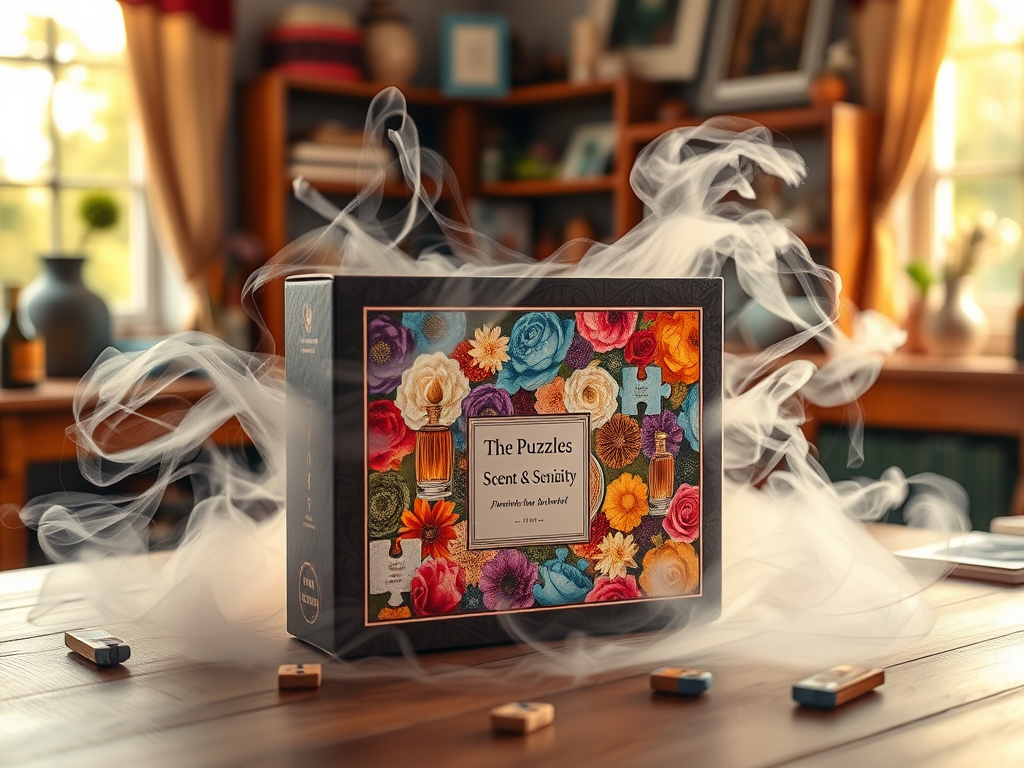
Now that I’m into working jigsaw puzzles again, I was chuffed to discover surrounding libraries (three!!) that offer used puzzles. It provides me with a place to recycle puzzles I’ve bought and put together, as well as being a source for new-to-me, FREE puzzles, which helps my pocketbook. Because 1,000-piece jigsaws can get pricey–$10 and up–when a body puts together two or three a week.
I visited the first of these branch libraries a few weeks back, donating eight of my own and coming out with 11 of theirs. There was no check-in or -out; it was just take what you want, leave what you want. MOST of these puzzles have been in great condition. One was older (I could tell by the box) but still factory-sealed, and none so far have had any missing pieces. I even discovered I like those puzzles of Charles Wysocki paintings, which I never would have bought myself.
But then I opened THAT box
It was an older box with a scenic puzzle inside, and as soon as I lifted the lid, the smell of heavy perfume smacked me in the face. I thought if I left the box open the smell would dissipate, but instead, it took over my craft room.
I put the lid back on the box and set it aside for return, but it was too late. The smell would not leave the room, so I trashed the puzzle before the rest of the house stank. I then examined the other boxes I hadn’t yet opened for a similar smell and trashed another. I felt guilty–trashing the library’s generous offering–but it was one of those musky scents that lingers like a shroud, choking the living.
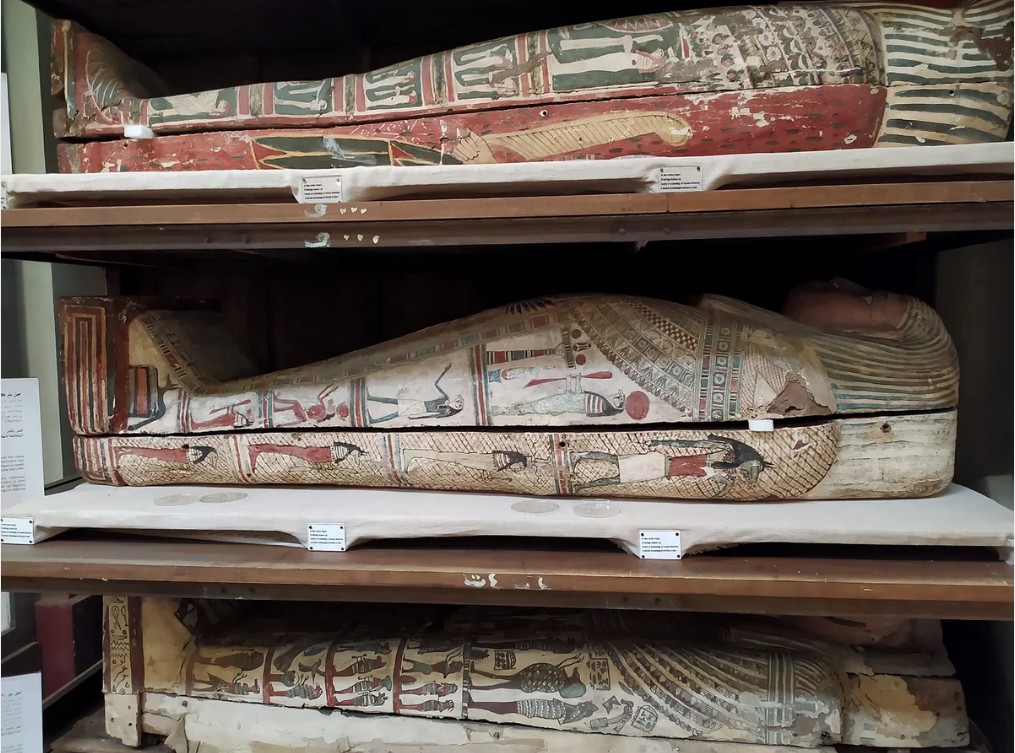
Speaking of shrouds, I just read an article in Scientific American titled, “What Sniffing Mummies Taught Scientists About Ancient Society.” Bottom line: richer people were mummified with more costly spices and resins. Basic mummy scents were described as “having fragrance notes of old linen, pine resin and citrus oils—with just a whiff of pest repellent,” while richer folks’ remains had a more complex scent profile, “and most often were described by the trained sniffers as ‘sweet,’ ‘woody’ and ‘spicy.’”
This reminds me a little of the documentary I watched about becoming a sommelier, in which one candidate described a wine’s bouquet as having “a hint of new tennis balls.” Can’t think of anyone who’d want to drink that. Needless to say, the candidate did not qualify.
In any event, I’ve thought all along heavy perfumes give off the scent of death. Now this proves it. Glad I got that stuff out of the house. Maybe it will help decompose what’s buried around it in the landfill.
Too much scent and no sense
Many people have air fresheners in theirs cars to mask the smell of old fast-food containers and plug-in deodorizers in their homes to cover up the wet dog smell of their wet dogs. But some of us are sensitive to this mish-mash of scent. I’m happy to smell nothing, unless perhaps it’s those cliche aromas of bread baking, coffee brewing, popcorn popping or lemons being squeezed.
Then there’s the disappointment of receiving clothing you ordered only to open the bag and smell someone else’s perfume. Of course, we’re bound to buy returned items from time to time, but couldn’t people be more courteous and take care not to send their scent back with the item that didn’t work? Or couldn’t the seller expunge the scent somehow or refuse the refund?
For some people, being free from manufactured scent is a matter of life and death.
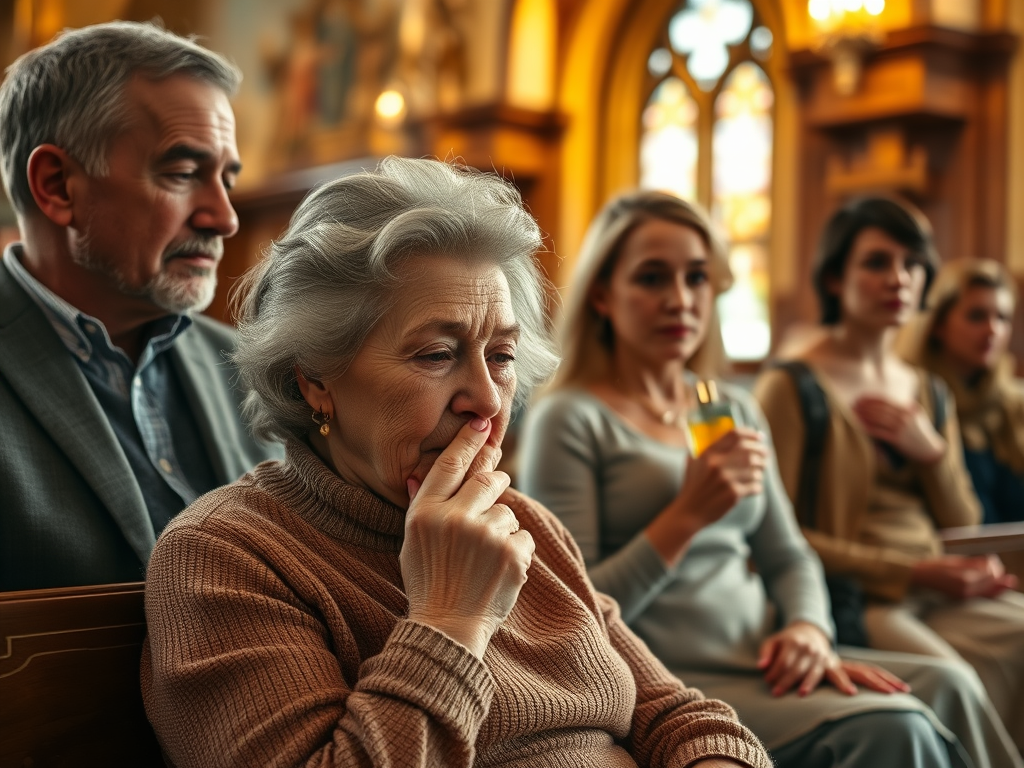
A friend of mine has a chronic lung condition caused by long COVID, which makes her extremely sensitive to air quality. When she’s out in a crowd–say attending church, for instance–she tries to sit in a more isolated area because all those colliding scents cause her to cough and have difficulty breathing.
At her church, this one young family always seems to sit behind wherever she and her husband move and, of course, the wife drenches herself in perfume. When my friend coughs, they give her dirty looks. Finally, my friend explained her lung condition to the couple and asked if they would please not sit near her in the future or else skip the perfume. They refused on both counts and were highly insulted.
The husband went so far as to tell my friend’s husband that she had an imaginary illness. He said she was psychosomatic, though he had no medical credentials to make such a diagnosis. He then went on to gossip about it with other church members, making my friend a bit of a pariah.
In my book, it was another good reason to steer clear of organized religion. Crowds aren’t all that safe these days anyway.
True confessions
That said, I admit that at one time I, too, wore perfume–up until my early 30s. My signature scent was Lancome’s Morocco. I think. Lancome says it was only introduced in 2021, and I used it in the late 1980s. So maybe I have the name wrong, but it was Lancome and it came in teal-accented packaging.
Lancome describes it as having top notes of bergamot and mandarin; middle notes of vanilla flower, vanilla, lavender and freesia; and base notes of sandalwood, amber, musk and tonka bean. That sounds about right, though I’ve no idea what tonka bean looks or smells like.
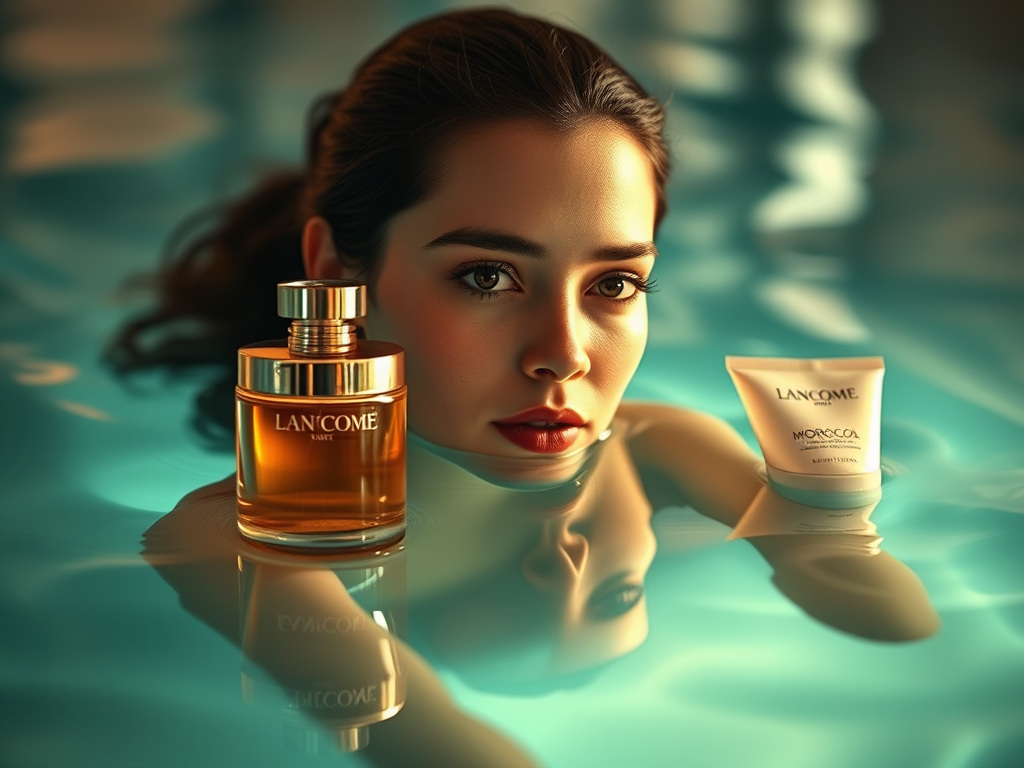
Whatever the perfume was, I used the body lotion, too, so it seemed to reside permanently in my pores. I thought I smelled great, but now I wonder.
I’ve always been repelled by the scent of Opium, which YSL stopped making in 2009 because its original formula contained so many ingredients considered allergenic that trying to save it was a losing battle. When I smelled it, I literally felt like throwing up. I remember asking a coworker who wore it to please stop, which she did not. I bought myself an office-size air cleaner instead.
But I wonder now, did I smell just as repellent to her? Perhaps so. Perhaps Morocco was also taken off the market because of allergens and reintroduced in a less-toxic formula in 2021.
De-scentsitizing my life
As I moved throught middle age, I started having allergic skin reactions to many scented products so stopped using them. Scented shower gel was the first to go and the one I really miss, but now I can’t tolerate scented candles either, and all my laundry products must be fragrance-free or I itch to death.

When my mother-in-law was alive, I dreaded being closed up in a car with her because of her old-lady perfume. Yes, there really is such a thing. Though scent hits everyone a bit differently, “old-lady” perfume is said to evoke powdery florals, heavy musks, and potentially some vintage notes. Some examples are Chanel No. 5, Shalimar, L’Air du Temps and Opium (I knew it).
So you can imagine how opening that puzzle box hit me. Wham! Slam! Stand back, ma’am!
Perhaps older ladies overdo on perfume because their sense of smell is deteriorating. Maybe they put on more perfume so THEY can smell it on themselves. Or maybe they’re trying to cover up “old-person smell,” which also is really real even though recent studies show it not to be as repellent as the smell of some young and middle-aged people. Particularly those who drown themselves in perfume, now known to me as the mummy’s kiss of death.
Etymology gets the last word
Interestingly, scent and sense both derive from the same Latin verb, sentire, which translates “to sense,” in all senses except sight. Sentire can be used to mean “to hear,” “to feel by touching,” “to smell,” “to taste,” and “to feel an emotion.”

All of which makes it confusing to me that people don’t use SENSE in their use of SCENT.
Senescence, on the other hand, comes from the Latin word senescere, meaning “to grow old,” which itself comes from the Latin senex, meaning “old.” It’s the root of the word senior, as in the descriptor “senior citizen.” It sounds like sincere, but that’s from a different root that means “of one growth” instead of “growing old.”
But maybe the two ARE related. Maybe aging, though it changes our scent, makes us more sincere and gives us more sense about trying to mask nature itself.
Remember to think of others BEFORE you douse.
ME? I’ll now be sniffing library puzzle boxes before I bring them home.







 & {sometimes} WHY
Leave a comment