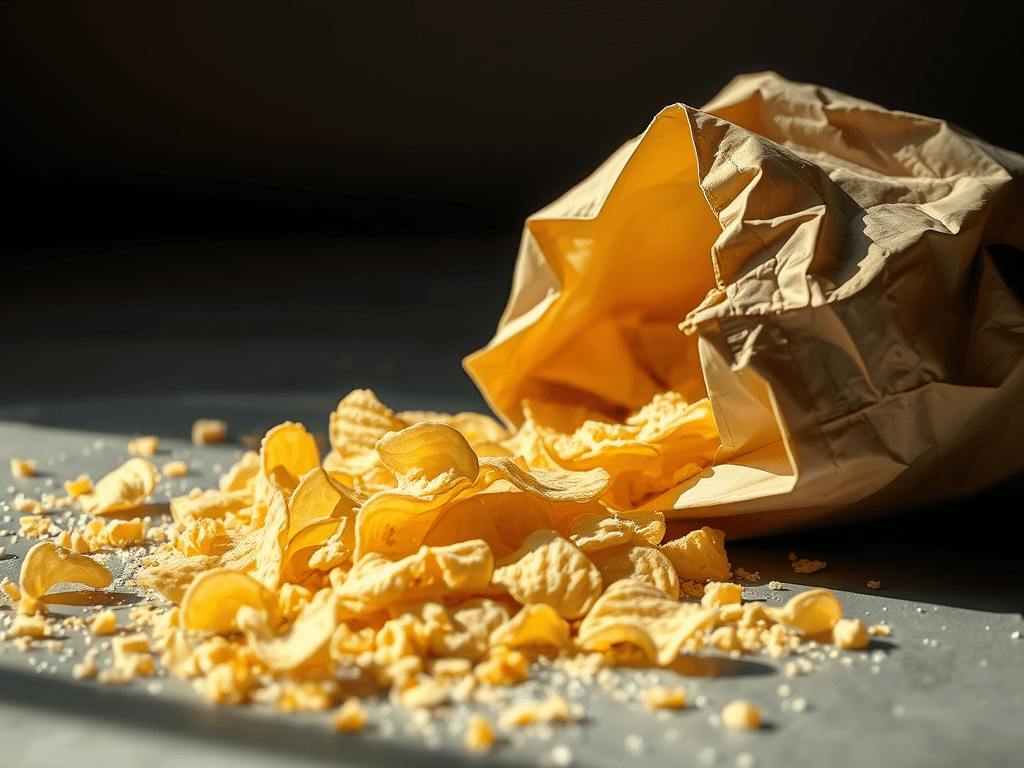
Why am I always the one eating the crumbs at the bottom of the bag of chips? My husband snacks just until he finishes up the whole ones, then shoves the remaining bag of crumbs back into the pantry, forgotten, unless I eat them, which I usually do.
If I’m the one that opens the bag, I still choose the broken ones first. What is my thing with brokenness?
As winter sets in, images of brokenness scramble for my attention. Hubs and I were on the way home from running errands a few weeks ago. He was driving, and I was daydreaming, staring out the passenger window. I noticed a thicket of trees, some dead, all now bare of leaves, revealing twisted trunks and mangled branches from a tornado that plowed through here in spring 2022.
My instinct was to think someone should have “tidied them up” by now. But the best thing for the thicket is to leave the broken trees as they are and let nature reabsorb them in its time. Life is a lot like that, too. Often it’s best to let nature take its course.
Things will work out in the end, right?
Looking out for ‘our’ wildlife
Hubs and I live on a large pond. Across the pond is a 40-acre field, which will eventually be developed as a city park but now is mostly grass and populated by Canada geese, mallard ducks, and terns. We see great blue herons on a daily basis in season, green herons and hawks less often, an occasional white egret, and once only, a kingfisher and an otter. We clearly spend a lot of time on our patio or at the back windows watching “our” wildlife, as we’ve come to think of them.
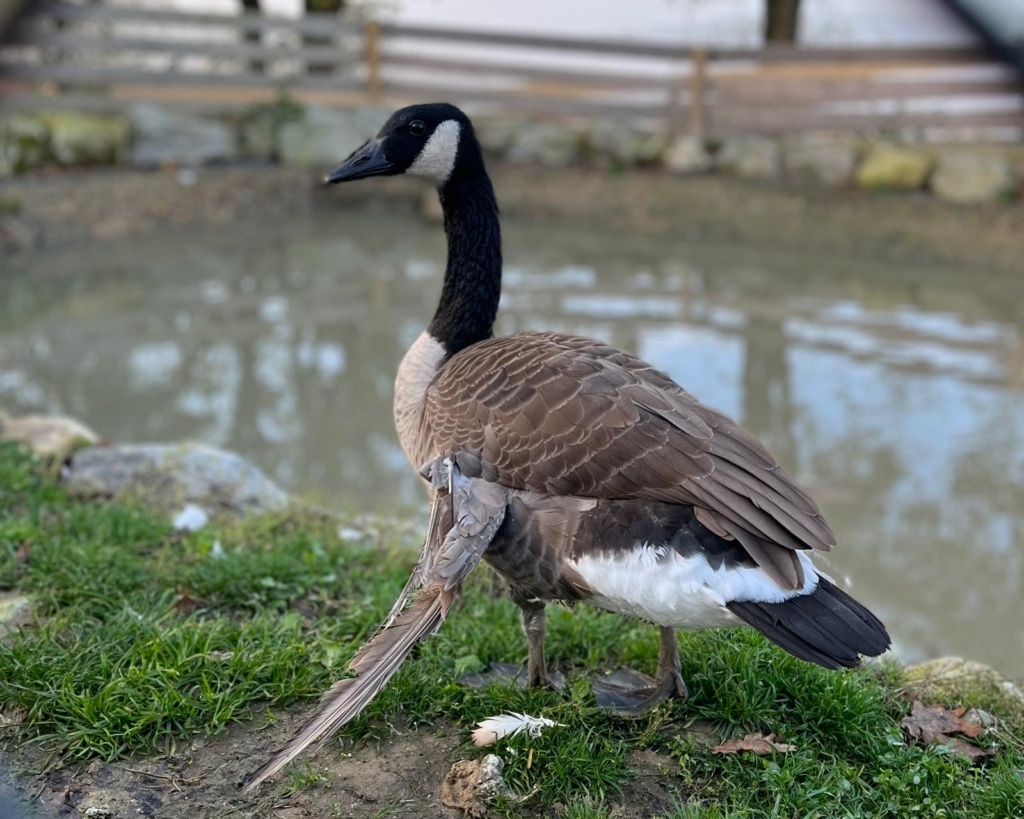
Early last summer we spotted a Canada goose with a broken wing muddle its way through goose-life by walking to keep up with its flying pals. When we first sighted this bird, I contacted the state Department of Natural Resources, which instructed me not to approach the wounded animal myself and gave me a list of agencies that handled animal rescues. I contacted them all, and not one would help a goose.
Geese can be a little tetchy when approached, I know. Many of the rescuers had in big type on their websites: NO GEESE!!! That made me sad, especially since the bird’s chances of surviving the winter here were slim. If caught in time, the wing could possibly be repaired and it could fly again.
Most of the other geese ignored their broken-wing fellow throughout the summer, but they didn’t attack it. It’s mate could be seen faithfully waddling along beside it. Then as fall settled in and the geese hordes gathered in the field across the pond, organizing for the flight south, the broken-winged goose was nowhere among them.
Of course, it couldn’t fly south. It couldn’t fly anywhere.
That day as I pondered those twisted trees mentioned at the start of this post, an exclamation from my husband jarred me from my reverie. “Look! It’s the broken-winged goose!” I looked up just in time to see it waddle across the main street of our town and into a neighborhood adjacent to ours.
Alone. Its mate must have left with the others.
Why am I so worried about a goose? Geese may be a protected species, but they’re certainly plentiful. This spring we had more families of goslings than the pond could hold. My neighbor’s backyard was full of at least five catches sunning themselves alongside their squawking parents.
Perfect versus imperfect
Years ago, hubs and I visited Stone Mountain Park in Georgia and saw a squirrel missing a front paw. The other squirrels were busy eating Ritz crackers crumbled for them by a tourist. They shared with their four-pawed brothers and sisters but chased off the maimed squirrel. It still managed to steal a few crumbs, was quite adept at eating with just one front paw, and had no difficulty skittering up and down trees on three-and-a-half legs.
I’ve never forgotten that image. Did the others not want to associate with it because its infirmity invited predators? Yet I’ve watched squirrels elude hawks in the cover of trees where the hawk’s wingspan would not allow them to maneuver. Even shy a front paw, I bet this squirrel could have managed and lived a long life.
Imperfection is always much more interesting than perfection. Perfect always looks pretty much the same. But imperfect? There are endless variations of that.
Nature takes its course
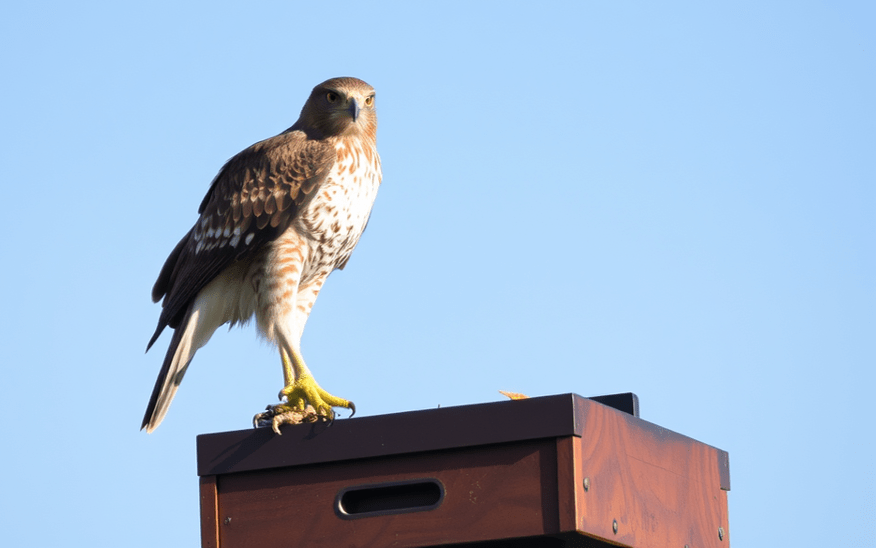
Around Thanksgiving we spotted a hawk sitting on the deck box just outside our living room window. We keep a birdfeeder there to entertain our housebound cats, who watch from their tower inside as the finches, sparrows and doves feed.
I suspected the hawk was laying in wait for songbirds to fly over the roof and down, but not a one appeared. The hawk cast its gaze across the pond though, undeterred. And its head swept from left to right and back, taking in the entire field, as if it owned it. Its size and obvious strength mesmerized us so close-up.
The broken-winged goose showed up a few more times, at the fringes of other migrating geese feeding in the field across the pond. Then, on Christmas Eve, we spotted what was left of a goose on the opposite bank, one wing sticking up from a diminished body, like a flag. We think it was “our” broken-winged goose. We figured a hawk did it in.
It may have been the hawk that perched on our deck box that other day. Maybe it was the broken-winged goose the hawk stalked all along.
A hunter once told me he saw an eagle try to attack a Canada goose sunning itself with its mate on a tiny island in a lake. The goose latched onto the eagle’s wing with its bill, dragging it into the water. The stunned eagle turned tail and fled at first opportunity, proving a goose’s “tetchiness” can serve it well.
But there’s no cover in our field, and maybe our goose was worn out from all that walking. I would be. In any event, it couldn’t fly away, so it became easy pickings for the hawk, who also needs to eat.
Nature’s imperfect gift, its scattered feathers now covered in snow.






 & {sometimes} WHY
Leave a comment